Related Article
Explore ready-to-use masking and racking solutions designed to help your team get organized, protected, and production-ready faster.
Looking for practical alternatives for industrial finishing? EPSI helps customers move forward with masking solutions engineered for heat, protection, reusability, and process consistency.
Download the latest EPSI technical guide and product reference materials.
Download Technical Guide Guide EspanolConnect with EPSI for help selecting masking, plugs, caps, hooks, racking, and finishing solutions for your application.

.png)
EPSI industrial hooks are engineered for reliable grounding, efficient part presentation, and consistent coating performance. Designed for powder coating, e-coat, and other finishing applications, our hook solutions help improve line efficiency, reduce rework, and keep production moving.
Browse available hook styles, wire diameters, dimensions, specifications, quantities, and pricing to find the right hanging solution for your finishing application.
Proper hook selection helps maintain reliable metal-to-part contact, supporting better powder attraction and more consistent finishing results.
Durable hook designs and planned replenishment help reduce the impact of coating buildup, repeated handling, and high-volume production demands.
The right hooks can improve loading, unloading, part spacing, and line flow so operators spend less time fighting the fixture.
Continue with the hook products you were reviewing, or start with featured hook picks.
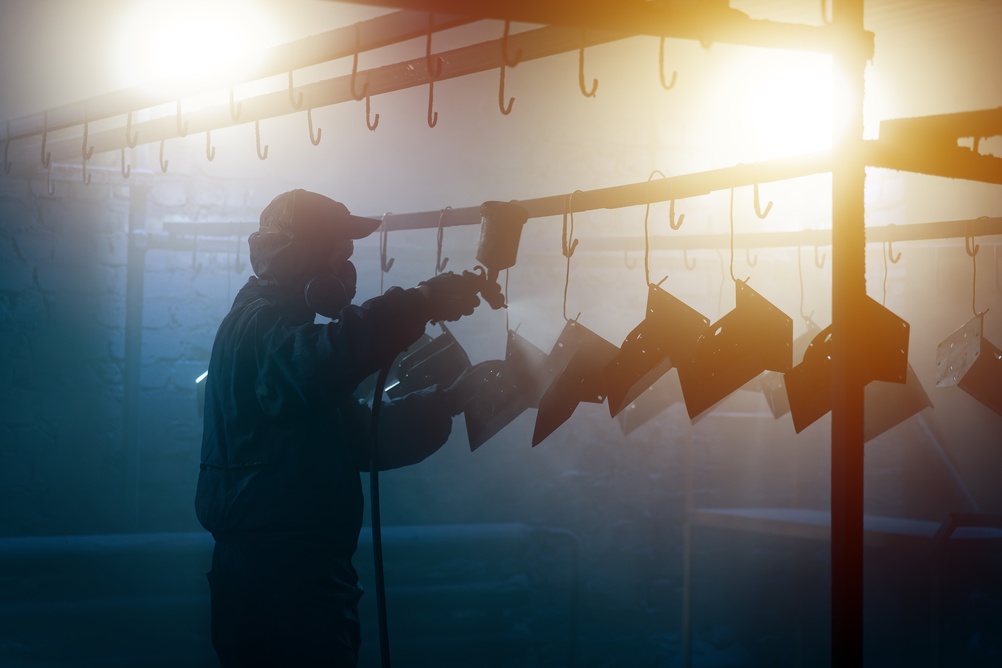
Hooks influence grounding, part spacing, coating access, operator handling, and the repeatability of your finishing process. A poor hook fit can create coating defects, unstable hanging, excess contact marks, and unnecessary rework.
Choosing the right hook starts with understanding the part geometry, weight, coating requirements, and how the part moves through the line.
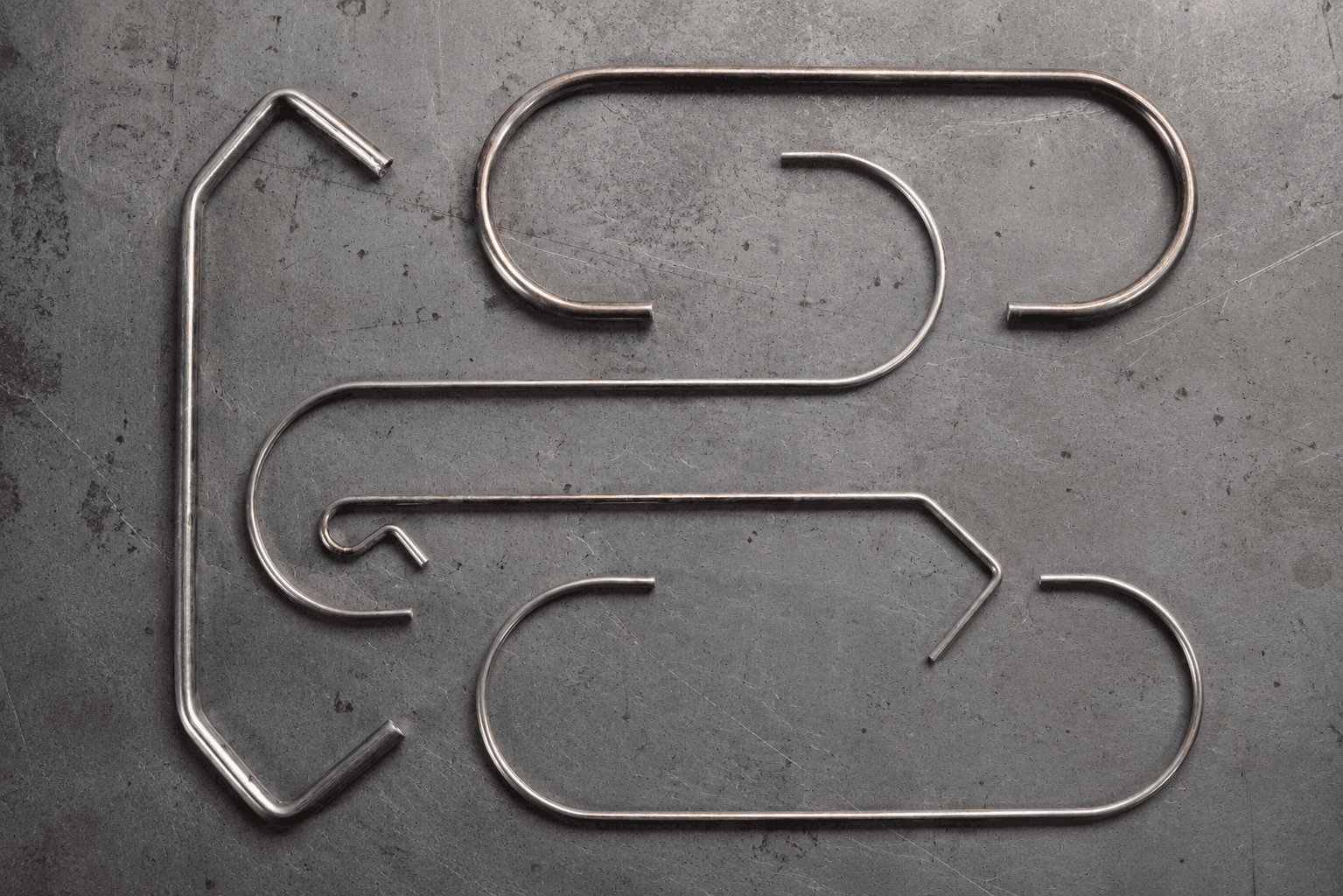
Coating buildup, bent hooks, worn contact points, and corrosion can affect grounding, part presentation, finish quality, and productivity. Learn four quick checks that can help identify hook problems before they become costly production issues.
Read the Hook Health CheckDifferent parts require different hanging strategies. EPSI hook solutions are designed to support secure suspension, dependable grounding, and efficient part flow across a wide range of finishing applications.
Designed for flexible holding performance and dependable part suspension where secure retention and repeat handling are important.
Buy NowA versatile solution for a wide range of hanging applications where simple loading, strong grounding, and efficient part flow are needed.
Buy NowBuilt for specific geometries and challenging part presentation requirements where precise positioning can reduce coating interference.
Buy NowIdeal for repeatable production environments where consistency, throughput, grounding integrity, and reduced part marks are critical.
EPSI hooks are built for industrial finishing environments where grounding, durability, repeatability, and part presentation matter.
Built specifically for powder coating, e-coat, and industrial finishing applications — not general-purpose hardware.
Choose from a wide range of hook styles, sizes, and configurations to support different part geometries and production needs.
EPSI can help identify hook options that improve grounding, reduce contact marks, and support more efficient loading.
Keep commonly used hooks available so worn or coated hooks can be replaced before they slow production.
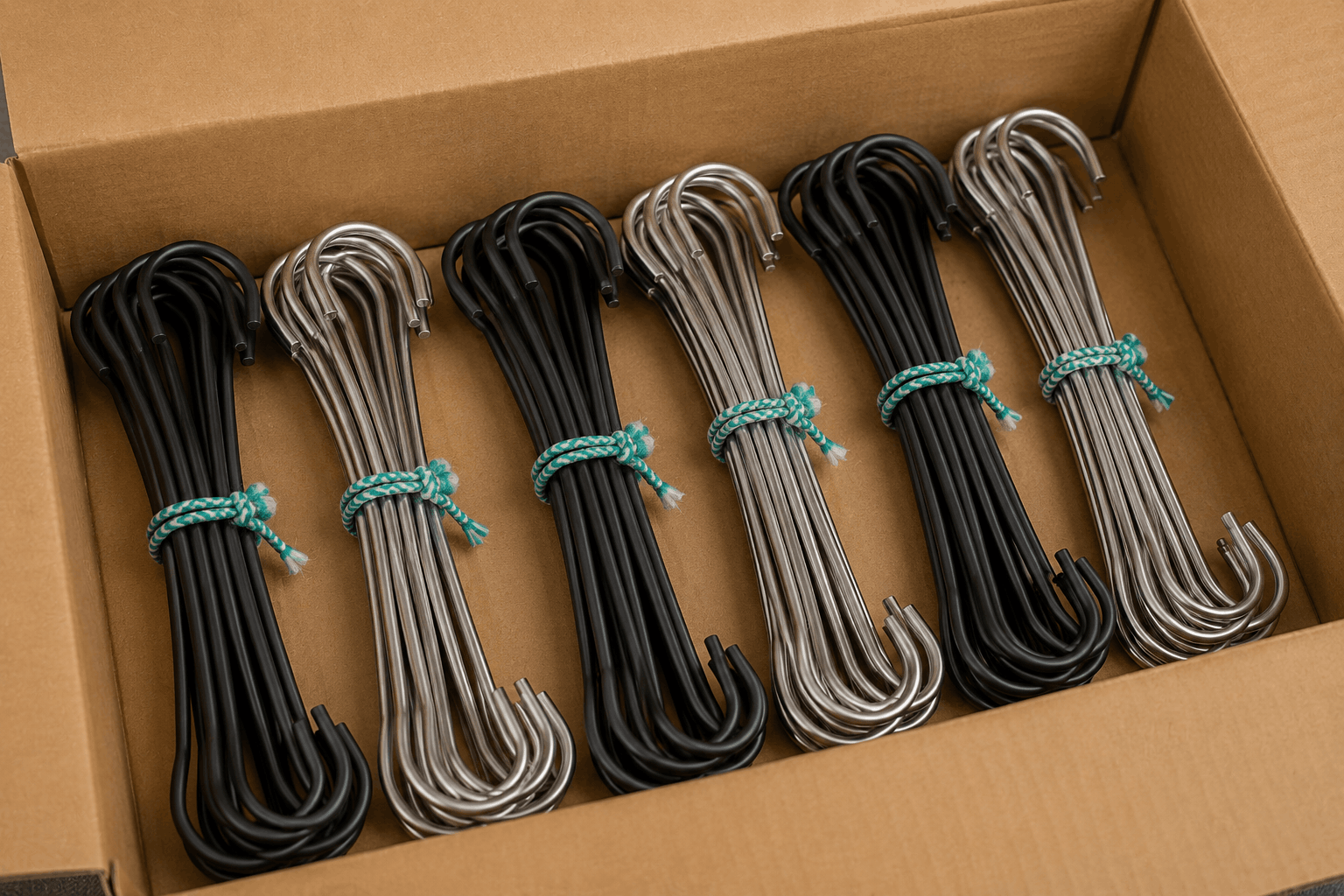
Keeping replacement hooks on hand is one of the easiest ways to avoid unnecessary downtime. EPSI's Vendor Managed Inventory program helps finishing operations maintain the right inventory levels for frequently used hooks and hanging components without the burden of constant manual ordering.
By monitoring usage and replenishing inventory on a planned schedule, VMI helps reduce emergency purchases, minimize stockouts, and keep production moving.
EPSI can help you evaluate part geometry, grounding needs, loading efficiency, and replacement planning to support better coating results.
Learn how industrial finishing hooks affect grounding, coating quality, part presentation, loading efficiency, hook replacement, and powder coating line performance.
Powder coating hooks are conductive hanging components used to suspend parts as they move through a powder coating or industrial finishing line. They connect the part to a rack, crossbar, conveyor, or other hanging system while helping maintain the metal-to-metal contact needed for electrostatic grounding. Industrial finishing hooks are available in different shapes, wire diameters, lengths, angles, and configurations to support different part geometries, weights, contact points, and production requirements.
Hook selection affects grounding, part stability, coating access, contact marks, loading speed, rack density, and overall finish quality. A hook that does not properly fit the part can cause movement, poor electrical contact, inconsistent positioning, excessive contact marks, or reduced coating coverage. Choosing the correct hook style, wire diameter, angle, and contact point helps create a more stable and repeatable finishing process.
Powder coating hooks help create the conductive path between the part, rack, conveyor, and ground. Clean, secure metal-to-metal contact allows the electrostatically charged powder to be attracted to the grounded part. Coating buildup, corrosion, worn contact points, or an improperly fitted hook can increase electrical resistance and weaken grounding. Maintaining clean contact areas and replacing worn hooks can help support consistent powder attraction and transfer efficiency.
The right hook depends on the part's geometry, weight, balance, available hanging point, coating requirements, line movement, and loading method. S-Hooks are versatile for many general hanging applications, while C-Hooks, V-Hooks, CV-Hooks, Diamond Hooks, Spring Tube Hooks, C-LAW Hooks, and other specialty designs support different part shapes and production needs. EPSI can help evaluate the application and recommend a hook style, size, wire diameter, and configuration.
Powder coating hooks should be inspected regularly and replaced when coating buildup, bending, corrosion, wear, or damaged contact points begin to affect grounding or part stability. There is no single replacement interval for every operation because hook life depends on production volume, part weight, cure temperature, stripping methods, handling, and coating accumulation. A routine hook health check can help identify problems before they cause finish defects, rework, or downtime.
Yes. Coating buildup can insulate the hook and reduce the quality of the electrical connection between the part and the finishing system. This may contribute to weak powder attraction, inconsistent film build, poor coverage, excessive powder use, or rejected parts. Heavy buildup can also change the hook's dimensions, interfere with loading, reduce part stability, and make it harder for operators to maintain consistent hanging positions.
Yes. Properly selected hooks can make parts easier to load and unload, improve spacing, reduce part movement, support repeatable positioning, and decrease the time operators spend correcting hanging problems. Hooks can also help improve rack density when their shape and orientation allow more parts to fit within the available conveyor or rack envelope without interfering with coating access.
Standard hooks are established shapes and sizes that work for many common industrial finishing applications. Custom hooks are engineered or modified for a specific part geometry, contact point, weight, orientation, or production process. A custom hook may be appropriate when standard S-Hooks, C-Hooks, V-Hooks, or other common styles cannot securely support the part, provide adequate grounding, or achieve the desired presentation and loading efficiency.
Yes. Industrial hooks and hanging components are also used in e-coat, liquid painting, anodizing, electroplating, cleaning, pretreatment, curing, material handling, and other finishing processes. Each application may have different requirements related to conductivity, chemical exposure, temperature, drainage, part orientation, and load capacity. The hook material and design should be compatible with the specific finishing environment.
EPSI can review your part geometry, weight, hanging point, finishing process, grounding requirements, line conditions, production volume, and current hook-related challenges. Based on that information, EPSI can recommend standard hooks, high-volume hooks, specialty hooks, custom hanging solutions, modular racking components, or replenishment support. EPSI's Vendor Managed Inventory program can also help keep frequently used replacement hooks available and reduce the risk of production delays caused by stockouts.

Designed to handle the most unusual hanging situations.

Can be Used in Combination to Daisy Chain Multiple Items Together

Combines the Features of a V-Hook with the Ease of Use of a C-Hook

*Diamond cross-section makes for better current flow, less touch-up and holds more weight.

Allows for Hook Marks to be Hidden Inside of Holes and Other Non-Cosmetic Features

p/n: HKSC 002040
Suitable for products that have no holes for suspension

Designed to Fit Around Contact Points of Most Suspension Systems and Rods

Can be Used in Combination to Daisy Chain Multiple Items Together

V-Hook Geometry is Extremely Stable Under Loads (as compared to other hook geometries)

V-Hook Geometry is Extremely Stable Under Loads (as compared to other hook geometries)

Ball Bearings Ensure Smooth Rotation Even Under Loading


