1
Start with the process
Identify whether the cap will be exposed to powder coating, e-coating, plating, anodizing, wet paint, blasting, cleaning, shipping, or general protection conditions.

Explore ready-to-use masking and racking solutions designed to help your team get organized, protected, and production-ready faster.
Looking for practical alternatives for industrial finishing? EPSI helps customers move forward with masking solutions engineered for heat, protection, reusability, and process consistency.
Download the latest EPSI technical guide and product reference materials.
Download Technical Guide Guide EspanolConnect with EPSI for help selecting masking, plugs, caps, hooks, racking, and finishing solutions for your application.

.png)
Protect threads, studs, fittings, holes, and critical surfaces with masking caps built for the temperature, chemistry, geometry, and handling demands of your finishing process.
Browse available cap materials, styles, sizes, specifications, quantities, and pricing to find the right masking solution for your application.
Caps are only one part of an effective masking setup. Explore plugs and other masking products that can help protect holes, threads, ports, edges, and surfaces throughout your finishing process.
Explore MaskingWhen a standard masking product is not the right fit, EPSI can engineer a custom solution around your part geometry, process conditions, masking requirements, and production goals.
Explore CustomMaterial requirements are changing across industrial finishing. Review EPSI's PFAS alternative options and identify practical product paths for applications where material composition or compliance goals are changing.
Explore AlternativesThe right cap depends on more than diameter alone. Match the material, fit, geometry, removal method, and expected reuse to the actual conditions on your line.
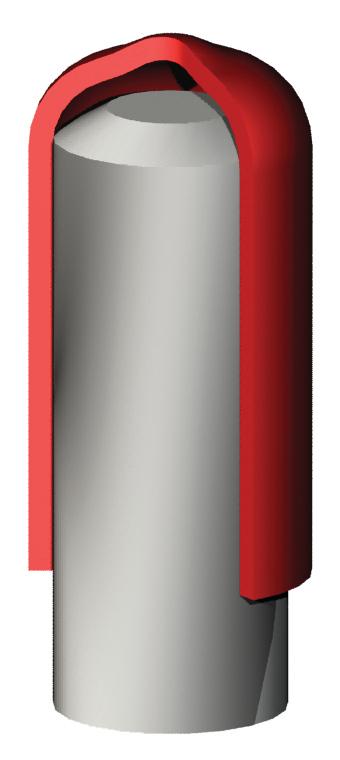
Identify whether the cap will be exposed to powder coating, e-coating, plating, anodizing, wet paint, blasting, cleaning, shipping, or general protection conditions.
Select a cap material that can tolerate the actual process temperature, including oven exposure, cure cycles, dwell time, and repeated use where applicable.
Measure the feature being protected and verify the inside diameter, outside diameter, depth, and required coverage. A secure fit helps keep the mask in place without making removal unnecessarily difficult.
Threads, studs, fittings, ports, tubes, and irregular profiles may require different cap shapes. Flanged, washer-style, or specialty designs can protect a defined area more efficiently than a standard cap.
If operators mask and unmask high volumes of parts, easy-removal features can reduce handling time. Consider how the cap will be gripped and removed after coating or finishing.
Reusable silicone may make sense for recurring high-temperature work, while economical materials can be better for lower-temperature protection. Compare total use cost, not only the unit price.
Different materials and geometries solve different masking problems. Use these broad categories as a starting point, then confirm dimensions and process conditions for the specific product series.
Designed for demanding finishing environments where heat resistance, flexibility, durability, and repeatable masking performance are important.
A flexible, economical option for applications that do not require the same high-temperature capability as silicone but still need reliable masking and protection.
Useful when a defined face or edge must be covered, or when operators need a feature that makes high-volume installation and removal easier.
Specialized geometries can address unusual part profiles, precision coverage areas, handling requirements, or process conditions that standard caps do not fit well.
Industrial caps can serve as temporary masks during finishing or as protective covers during handling, shipment, storage, cleaning, and other manufacturing steps.
Protect threads, studs, ports, and critical surfaces from powder buildup before the part enters the cure cycle.
Explore ApplicationMask connection points and defined surfaces where coating coverage must be controlled during the electrocoating process.
Explore ApplicationProtect selected areas from plating deposits while helping maintain clean boundaries on threads, fittings, and precision features.
Explore ApplicationCover surfaces or features that must remain free from anodized finish while supporting repeatable handling on production parts.
Explore ApplicationTemporarily cover threads, connectors, studs, and mating surfaces that should remain paint-free during spray or dip processes.
Shield selected features during blasting or surface preparation when abrasive media must be kept away from a defined area.
Protect male threads, studs, and related features from coating, contamination, damage, or debris during manufacturing and handling.
Cover exposed ends, fittings, and sensitive features to help keep parts cleaner and reduce incidental damage before final use or assembly.
Continue with the products you were reviewing, with featured picks to round out the selection.
Keeping the right cap sizes and materials on hand is one of the easiest ways to avoid unnecessary downtime. EPSI's Vendor Managed Inventory program helps finishing operations maintain appropriate inventory levels for frequently used caps without the burden of constant manual ordering.
By monitoring usage and replenishing inventory on a planned schedule, VMI can help reduce emergency purchases, minimize stockouts, and keep masking operations moving.
Part geometry, dimensions, line temperature, chemistry, coating conditions, and the surface being protected can all affect cap selection. EPSI can help you identify the right material, size, style, and masking approach for your application.
Explore practical guidance for comparing masking materials, choosing the right products, and building a more repeatable powder coating process.


Find answers to common questions about cap materials, sizing, temperature, applications, reuse, removal, and inventory planning.
Industrial masking caps temporarily protect studs, threads, fittings, tube ends, ports, holes, and other defined surfaces during manufacturing or finishing. They are commonly used during powder coating, e-coating, plating, anodizing, wet paint, blasting, cleaning, shipping, and storage. The cap creates a removable barrier so the protected area can remain free from coating, contamination, debris, or incidental handling damage.
Start with the process conditions the cap must survive. Consider peak temperature, dwell time, chemistry, coating material, handling, required flexibility, and whether the cap will be reused. Silicone is often selected for demanding high-temperature finishing, while EPDM and other materials can be practical for lower-temperature or general-protection applications. The best choice balances process compatibility, fit, durability, and total use cost.
The better option depends on the actual cure temperature and application requirements. Silicone is commonly chosen when higher heat resistance and repeated reuse are important. EPDM can be a more economical choice when process temperatures are within the material's limits. Because oven temperature, dwell time, part geometry, coating buildup, and reuse expectations all affect performance, confirm the product specifications before selecting either material.
Measure the outside diameter of the feature being covered and determine how much depth or surface area needs protection. Then compare those dimensions with the cap's inside diameter and internal length. The fit should be secure enough to stay in place during processing without creating unnecessary installation or removal difficulty. Threads, tapers, irregular geometry, and coating thickness can influence the final size selection.
Many masking caps, especially durable silicone products, can be reused when the material and application are designed for repeated processing. Actual service life depends on temperature exposure, coating buildup, chemistry, part geometry, installation technique, removal method, and cleaning practices. Inspect reusable caps between cycles and replace products that are torn, stretched, brittle, excessively coated, or no longer creating the required masking fit.
A standard cap primarily covers the outside of a projecting feature such as a stud, tube, or fitting. Flanged and washer-style designs add a wider masking surface that can protect an adjacent face, edge, or defined circular area. These styles can also provide a more accessible gripping feature for removal. The best geometry depends on the exact surface that must remain coating-free.
Yes. Caps are used across many industrial processes, including e-coating, plating, anodizing, wet paint, blasting, cleaning, assembly, shipment, and storage. Each process can expose the cap to different temperatures, chemicals, pressures, abrasion, and handling conditions. A cap that works well for simple part protection may not be appropriate for a heated finishing line, so material compatibility should always be verified.
Start with consistent sizing so operators are not forcing an undersized cap or handling a loose one. Flanged, tabbed, or easy-removal styles can provide a better gripping point where appropriate. Standardizing cap colors, storage locations, work instructions, and part-specific masking kits can also reduce search and handling time. For repetitive work, small improvements in installation and removal can add up across production volume.
Vendor Managed Inventory can help maintain agreed stock levels for cap sizes and styles that are consumed regularly. Instead of relying only on operators or purchasing staff to notice low inventory and place urgent orders, replenishment can be planned around actual usage. This can reduce stockouts, emergency freight, purchasing administration, and production interruptions while improving visibility into the masking products used most frequently.
Yes. Cap selection can become more complex when the part has unusual geometry, tight tolerances, changing diameters, adjacent surfaces that also need protection, or process conditions that limit material choices. EPSI can review the masking point, dimensions, temperature, finishing process, handling method, and expected production volume to help identify an appropriate standard product or a more specialized masking approach.

Conical Profile Allows for Easy Insertion as a Plug

Conical Profile Allows for Easy Insertion as a Plug

Used as a cap over threaded studs, dowels, and protrusions. Used as a plug for tapped holes, irregular contours and threaded holes.

EZY™ Caps are ideal for large diameter or long length products.

Flanged Caps are designed to fit standard threaded fittings or smooth cylindrical tubing

Used as a cap over threaded studs, dowels, and protrusions.

MBM caps are made for especially difficult or unusually large geometry.

Used as a cap over electrical connectors and rectangular extensions.

Tapered polyethylene cap and plug used for protection from debris and contamination during handling and storage.

Used as a cap over threaded studs, dowels, and protrusions. Used as a plug for tapped holes, irregular contours and threaded holes. The washer feature creates a grounding area around holes and studs.

